Caracalla · Natatio · 2024
Eterna
Eterna
Bellezza.
Scroll
A temporary intervention inside the Natatio of the Baths of Caracalla. A light, dynamic structure built to host a photographic dialogue between Piranesi and Gabriele Basilico — two centuries of Rome, in black and white, observed from the same point of view.
The intervention is set within the natatio — the great open-air pool of the Baths of Caracalla, built between 212 and 217 AD. Eighteen centuries later, its towering brick walls still define the void where the structure now lands: a contemporary insert that does not compete with the ruin, but uses it as the second wall of the exhibition.
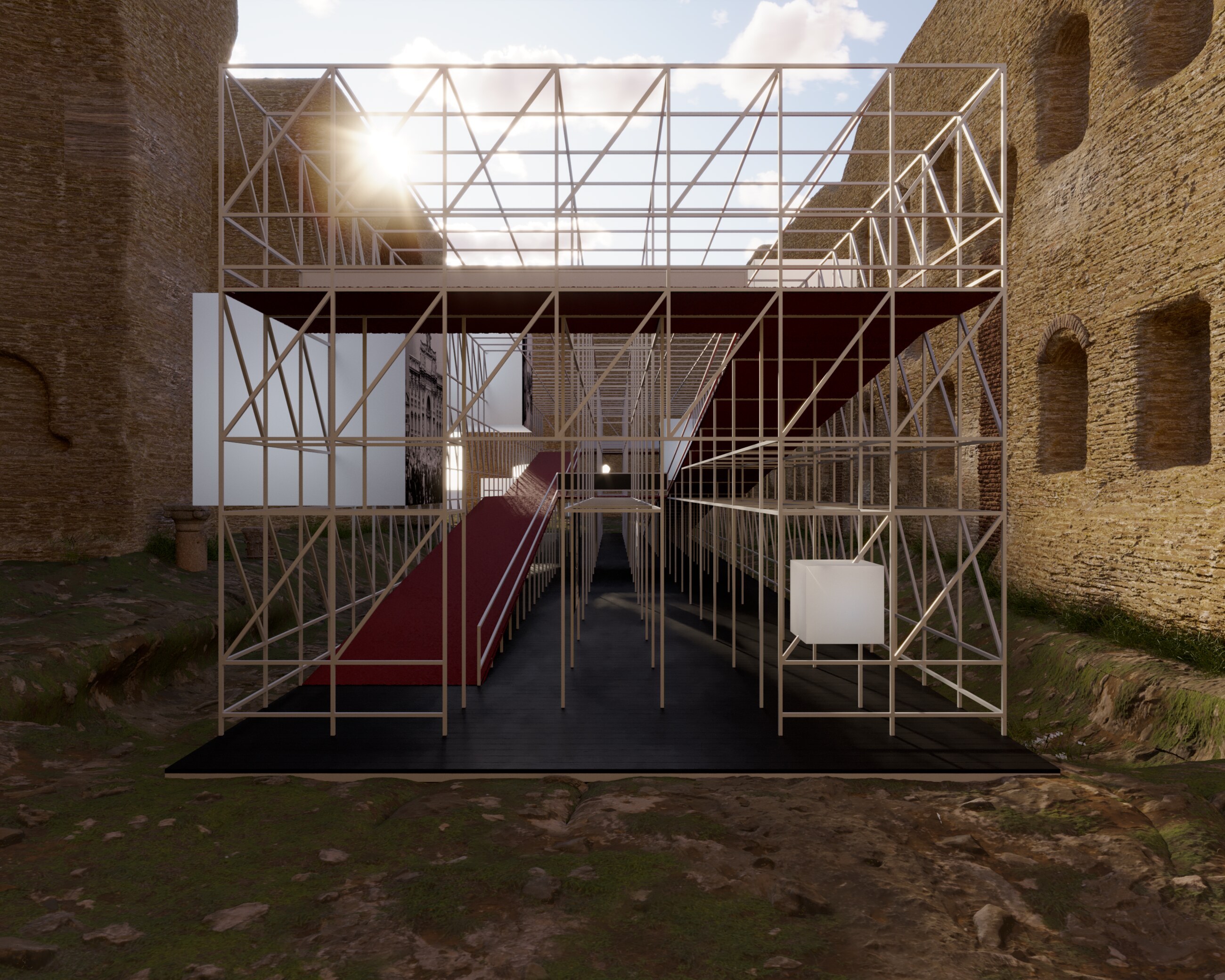
Fig. 01 — Daylight view · the structure between the walls
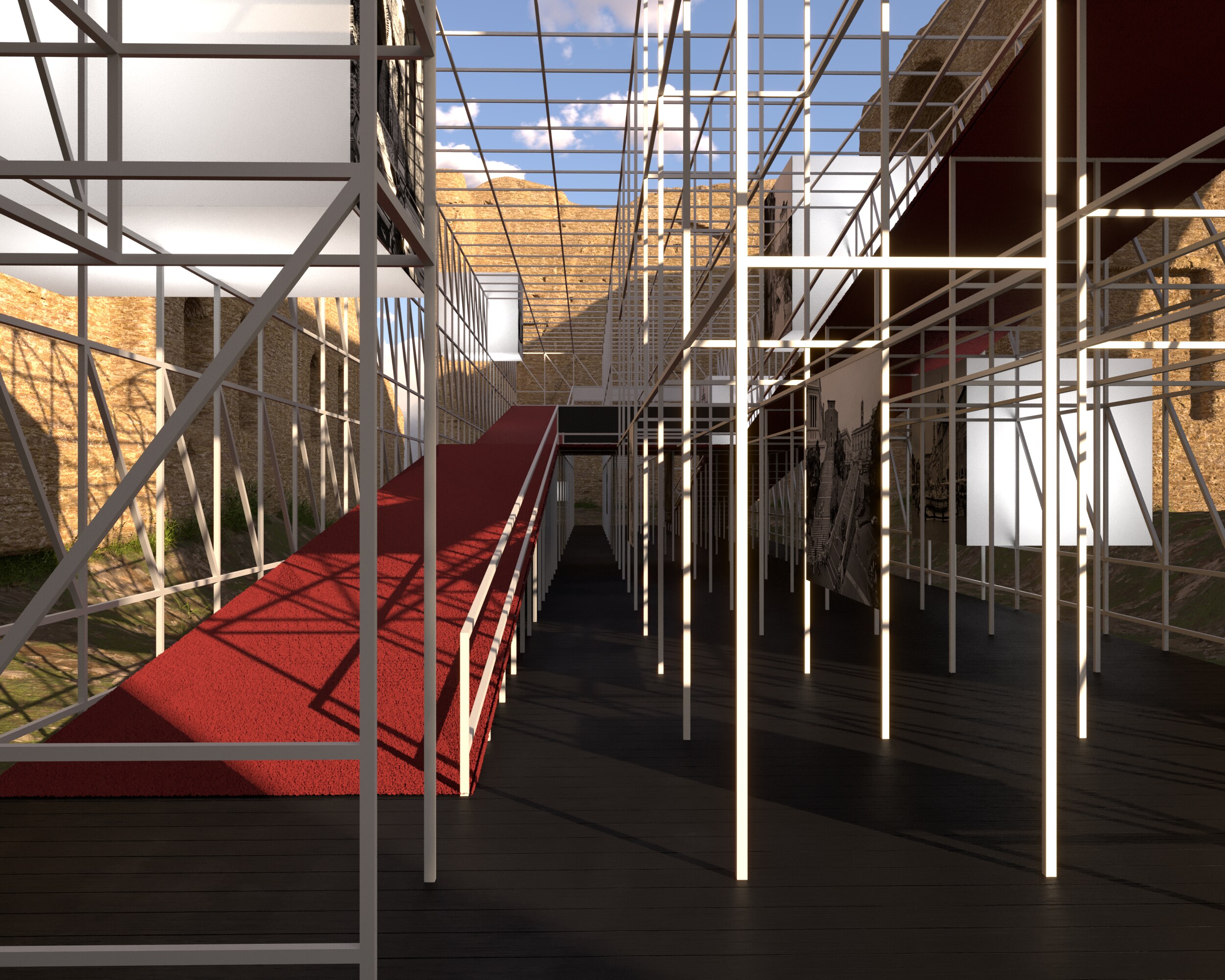
Fig. 02 — Interior path · scaffold and red carpet
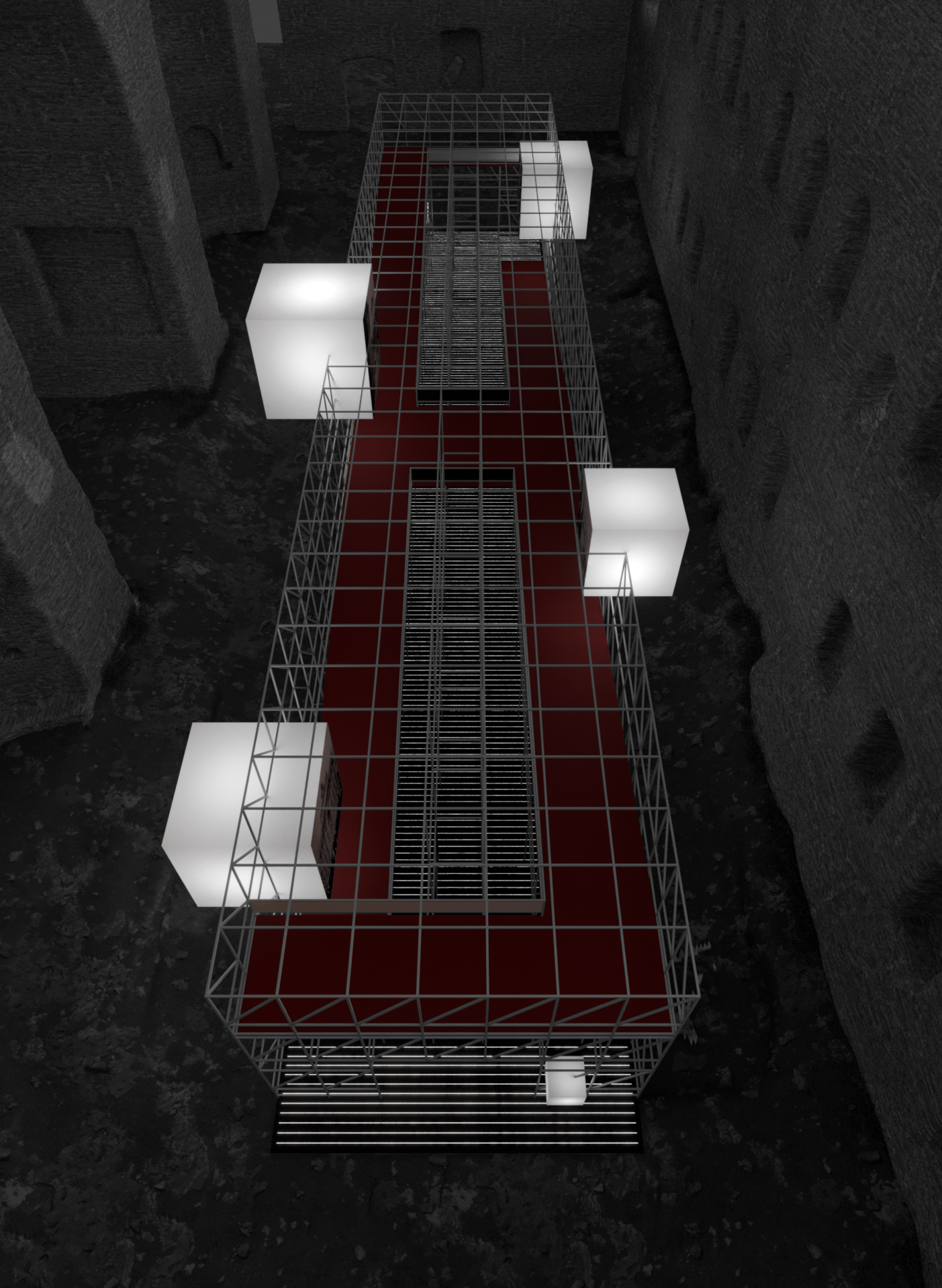
The architecture is a light, demountable steel grid — a tubular scaffold lined with white panels that act as exhibition walls. The frame supports two levels of viewing and a continuous bordeaux carpet that cuts diagonally through the volume, guiding visitors from one end to the other.
Nothing touches the ruin. The intervention floats inside it.
By day · structure read as scaffold
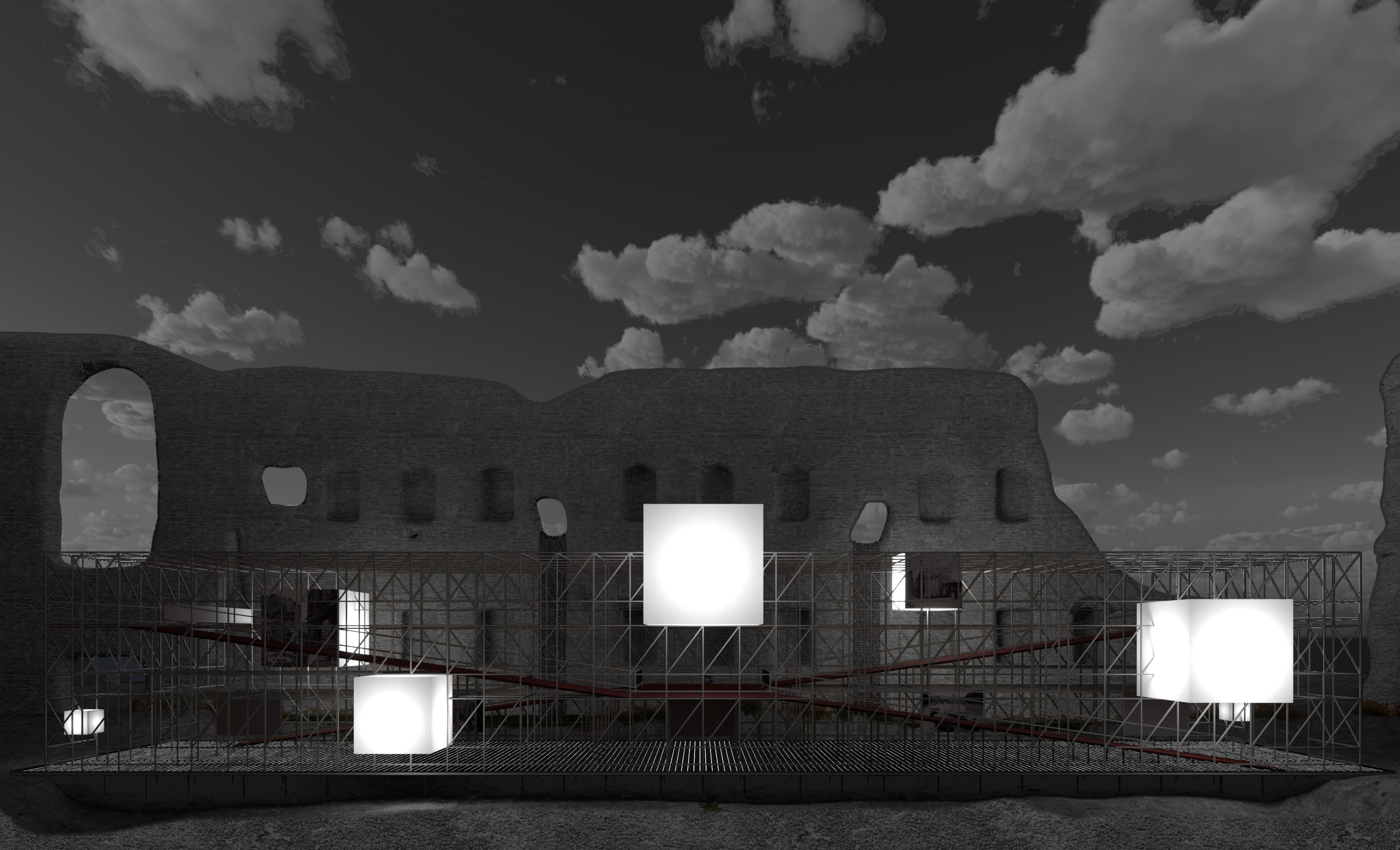
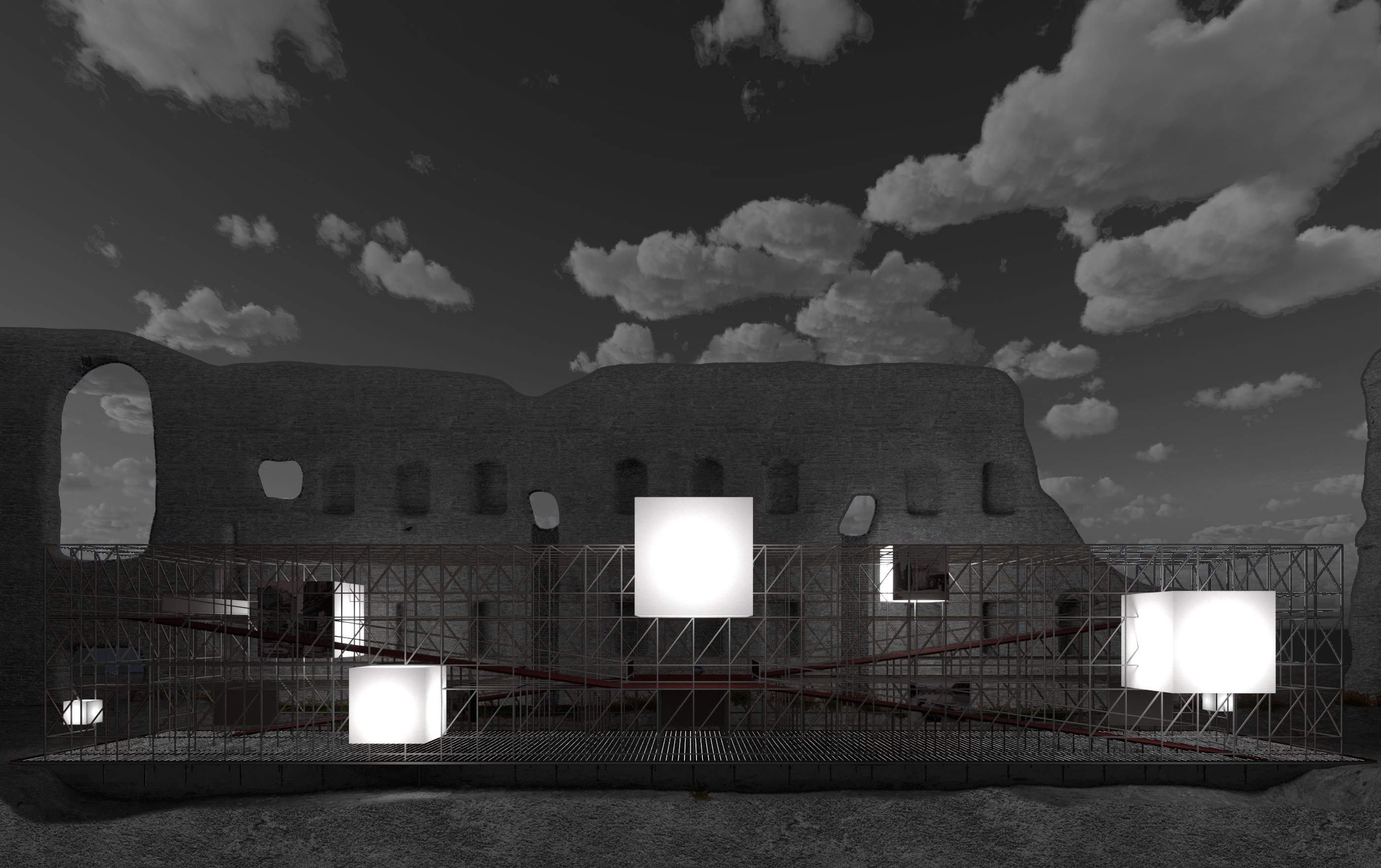
By night · luminous cubes activate the ruin
By day the structure is a thin geometric mark on the brick — a transparent scaffold that disappears against the monumental scale of the walls. Visitors read both at once: ruin and intervention, side by side.
At night the structure inverts: large illuminated cubes punctuate the volume, turning the exhibit into a constellation of light that re-inhabits the ancient void. The ruin becomes the backdrop of its own contemporary echo.
The monumental engravings of Piranesi captured the grandeur and atmosphere of ancient Rome, fixing its proportions and ruins into a visual canon that still defines how the city is imagined.
Basilico photographed the same monuments through a contemporary sensibility — black-and-white views that read the ruin inside the urban fabric of today, with discipline and quiet respect.
"Two centuries apart, the same eye returns to the same wall."Eterna Bellezza — project note, 2024